

The fastest way to learn what a paddle does is to watch it on a Sunday, against the best players in the sport, with a title on the line. At the Veolia Chicago Cup at Life Time North Shore in Northbrook, Illinois, Project Coyote got that test. It made the women's doubles final.
Chicago was a heavy week: $1,271,734 in total payouts, 1,500 ranking points for every title, and no bronze matches. Lose, and you go home. Across the draws, the Coyote produced five quarterfinals, one semifinal and one final.
All the way to Sunday
Catherine Parenteau and Tyra Black entered women's doubles as the 2 seed and did not drop a game in the quarterfinals or the semis. They beat Lacy Schneemann and Jessie Irvine 11-2, 11-7 in the quarterfinals, then Kate Fahey and Milan Rane 11-5, 11-3 in the semis.
In the final they drew the 1 seeds, Anna Bright and Anna Leigh Waters, and took the first game 11-2. Bright and Waters answered with the next two and finished the week as champions. Parenteau went home runner-up with Project Coyote in her hand. It was a real push on a dominant week: Waters swept all three draws in Chicago and moved past 200 career PPA titles.
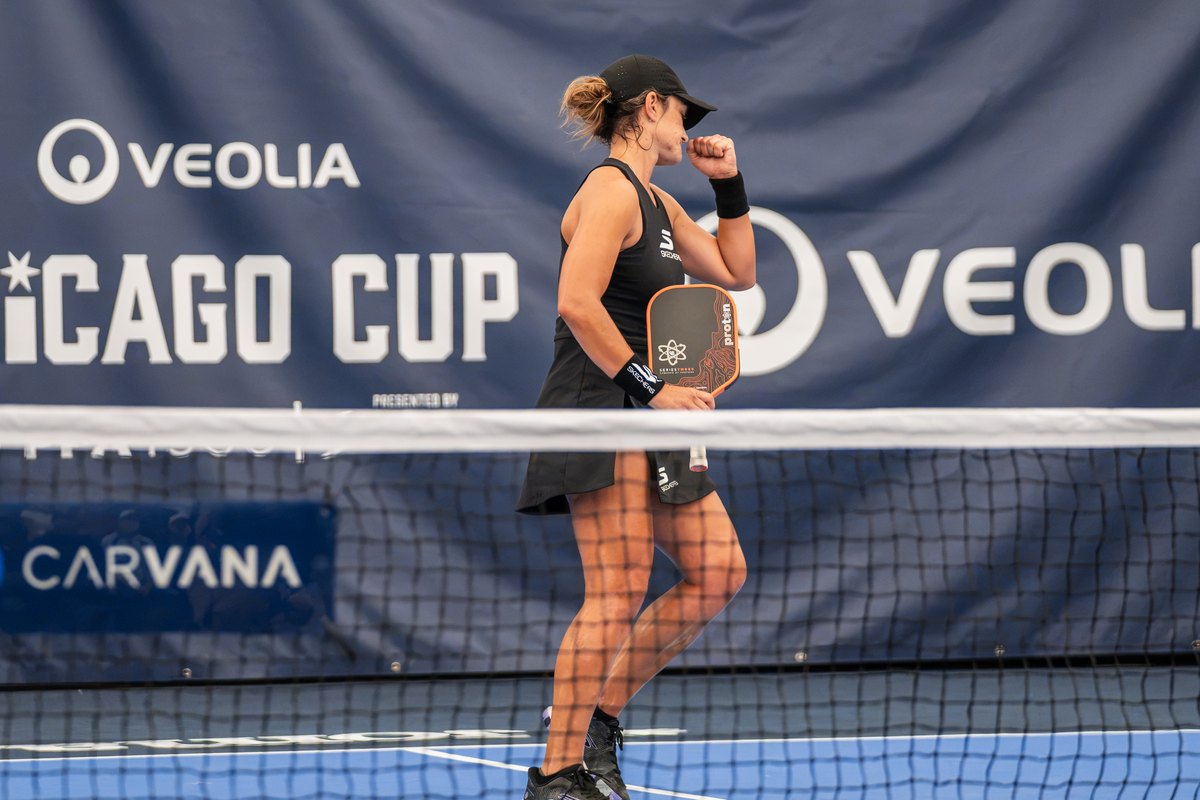
Parenteau also made noise in singles as the 7 seed, taking 2 seed Kate Fahey to three games in the quarterfinals before going out 4-11, 11-9, 8-11.
Three of four quarterfinals
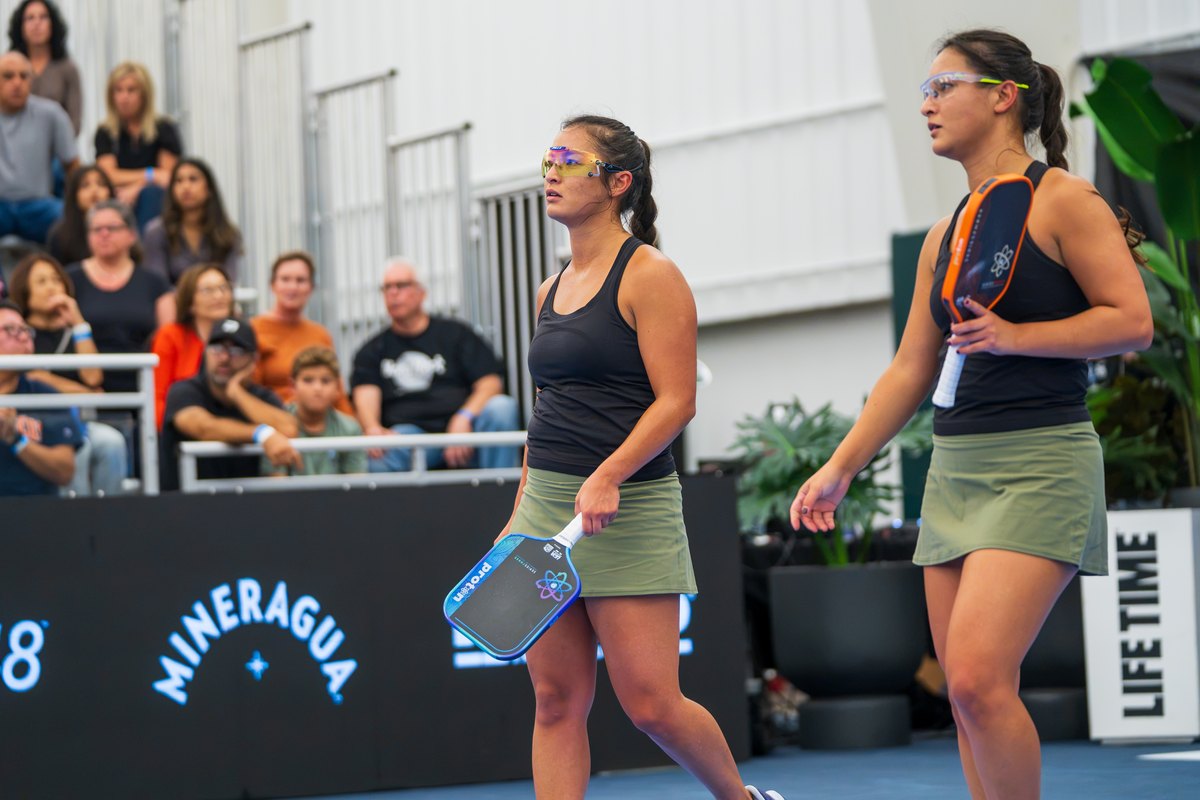
Women's doubles had four quarterfinals in Chicago, and three of them had a Coyote in them.
- Catherine Parenteau and Tyra Black, women's doubles, 2 seed: final
- Catherine Parenteau, women's singles, 7 seed: quarterfinal
- Jackie and Jade Kawamoto, women's doubles, 6 seed: quarterfinal
- Meghan Dizon and Ting Chieh Wei, women's doubles, 7 seed: quarterfinal
- Meghan Dizon and Jonathan Truong, mixed doubles, 12 seed: quarterfinal
The Kawamoto twins ran into Bright and Waters. Dizon and Wei fell to the 3 seeds, though Dizon won five straight matches across the week. The Kawamoto side of the draw is a nice snapshot of the Proton paddle line: Jackie plays the Coyote, Jade plays the Peacock. Same family, two Protons.
The 41 seed who would not go away
Maria Ford came into Chicago seeded 41st in singles. She beat the 24 seed 11-4, 11-5. Then she beat Genie Bouchard 6-11, 11-5, 11-5. Then she took Parenteau, a 54-time PPA champion, to three games before losing 12-10, 7-11, 11-3.
Two of those rounds were Coyote against Coyote. Which guarantees one thing: whoever won, the paddle moved on.
Why players keep picking it up
Across the last three PPA stops, the list of players on a Coyote kept growing: Meghan Dizon, Jalina Ingram, Naomi Nguyen and Catherine Parenteau in Mesa, Genie Bouchard added in Las Vegas, and in Chicago Jackie Kawamoto, Maria Ford, Callie Smith, Hall of Famer Kyle Yates and Greg Dow. Two players in Las Vegas and six in Chicago were playing a Proton without a Proton deal.
Three things explain most of it.
Power that stays predictable. As the Matt's Pickleball review put it, "Power, pop and spin are all there, and nothing about it is overly amplified or springy." You get the pace without the ball running away from you.
Quick in the hands. It moves easily, which is what you want when the kitchen line turns into a fast exchange.
Room for two hands. A 5.5 inch handle and a tapered throat give a two-handed backhand somewhere to live.
Proton asked me to test this one without telling me what it was, and after game one my thought was that Proton made foam feel good. Then they told me it isn't foam., Matt's Pickleball review
One spec, one build
There is no pro-only version and no team-issue build. The paddle in Sunday's women's doubles final is the paddle on the site: 15mm, elongated, polypropylene honeycomb core with a reinforced foam perimeter, 5.5 inch handle.
The most powerful and lightest paddle yet.
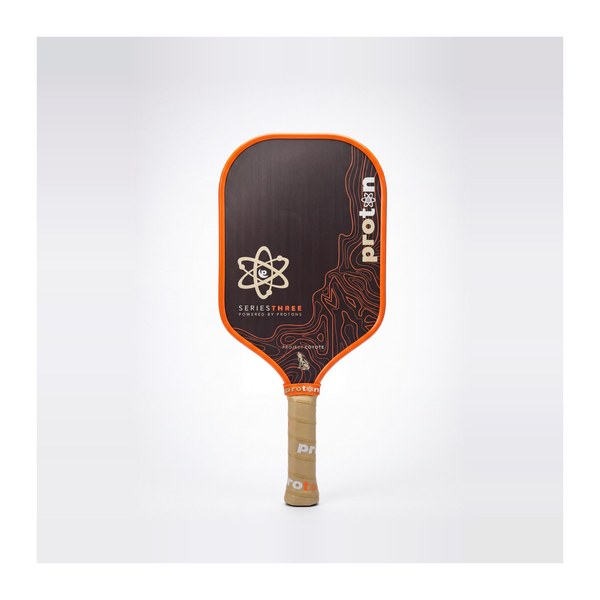
To see how it compares with the rest of the range, including the Peacock and the Roadrunner, browse the pickleball paddles, or see current pricing on the Project Coyote page.
Scores above were read from the official PPA draw after Sunday's finals in Chicago.


